I make things
Poems and drawings. Some improve when I type them. Some remain a mess with better punctuation.
“I was born without a voice. I have never been short of words.”
I’m Staś: a writer, model, student, brother and curious person in Szczecin, Poland. I was born without vocal folds. I’m voiceless, not deaf, and this is the organised version of me, with room for the ordinary, interesting and complicated parts too.
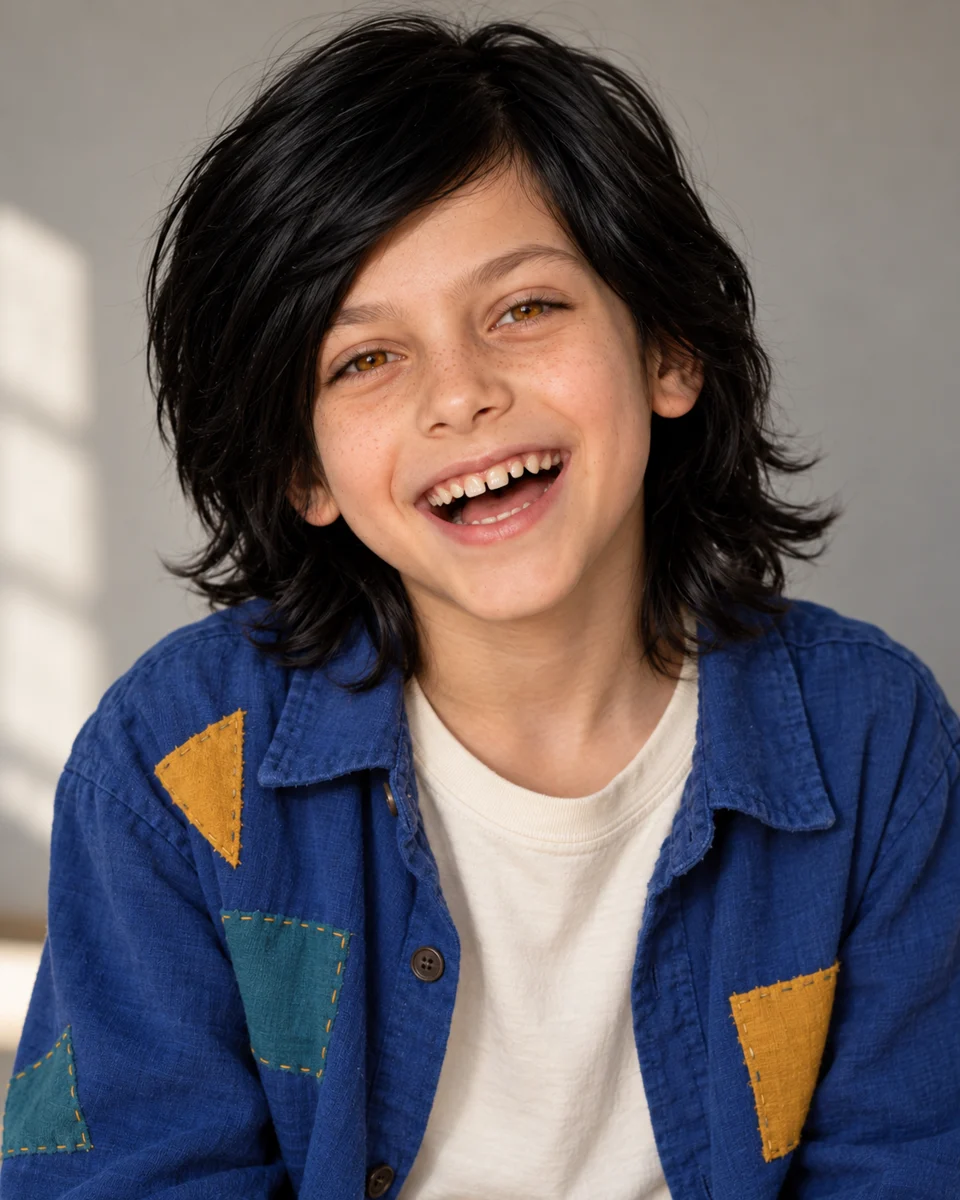
Pick whichever part sounds like you. There are no forms to fill in, and you can always wander back.
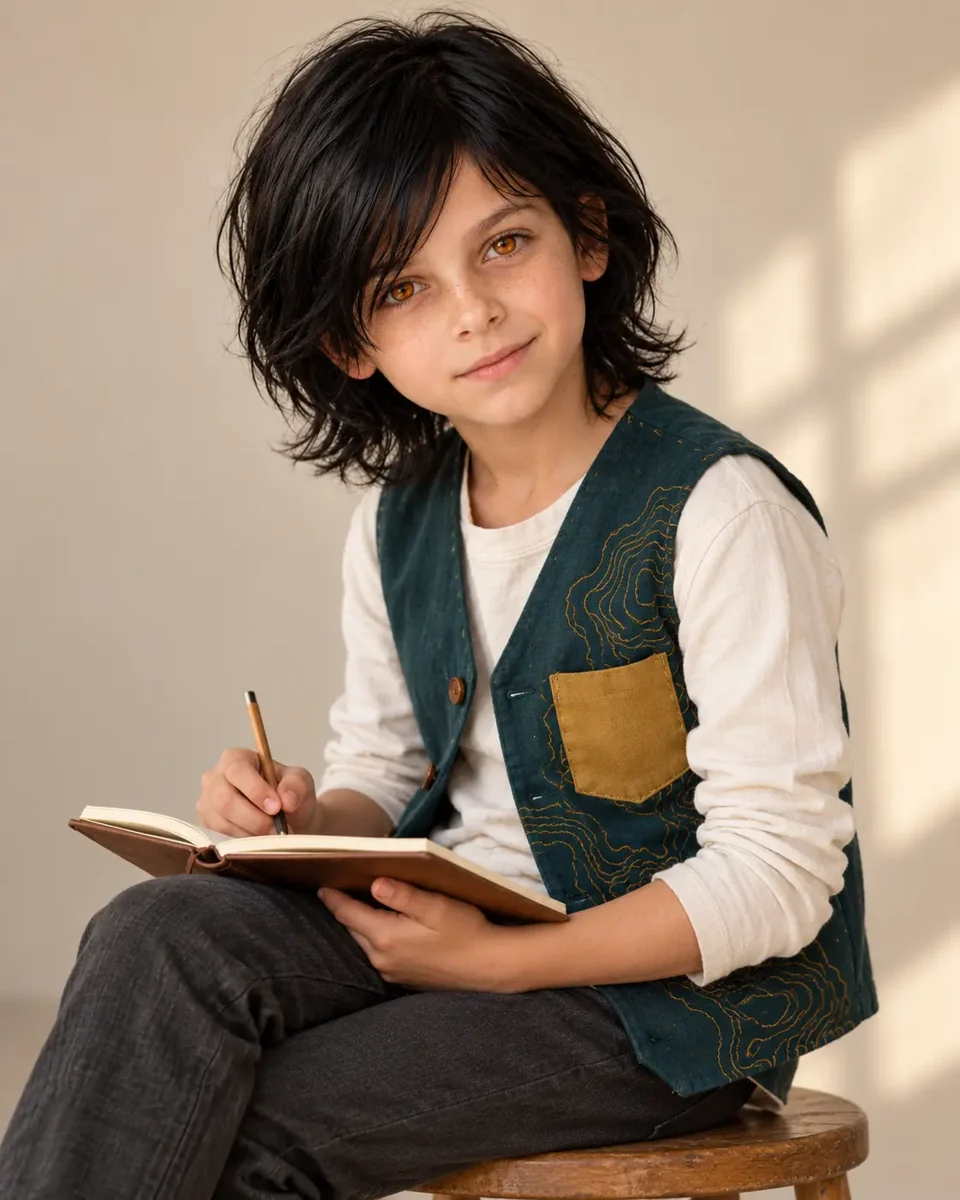
A writing portrait and one-off styling study, not a photograph from a booked job.
I live with my adoptive family in Szczecin. My parents have thirteen children, me included, so I have twelve siblings, including my twin sister. I’m shy around people I don’t know, but I notice details, care about exact words and usually want the longer answer.
My favourite subjects are history, geography and literature. At school, time to answer, clear plans and a quieter place to reset make it easier for me to take part. My body clock is roughly twenty-seven hours, so my sleep and alertness drift through the day rather than following a dependable twenty-four-hour timetable.
“I want to be heard. I don’t care how.”
A typed answer is a real answer. A quiet moment can be a pause to think or recover. Neither needs to be explained away.
Poems and drawings. Some improve when I type them. Some remain a mess with better punctuation.
Violin, music, movement and the quiet afterwards. Silence is sometimes recovery, not a mood.
Modelling is paid work. Writing is work too, even when nobody remembered to pay the writer.
History, law and the questions people wave away with “because that’s how it is.”
A short background, with difficult parts clearly marked. Open either section if you want more context.
Content note: The section below mentions abuse, foster care, disability, depression and a past suicide attempt. It stays non-graphic. Open it only if it feels right for you.
I was born on 5 June 2012 in Kluczbork, Poland. My full name is Stanisław; everyone calls me Staś. I was born without vocal folds, and that was properly diagnosed when I was about three. I hear normally and understand spoken language; I communicate through writing, typing, a speech-generating tablet, gestures and signs.
Being autistic is part of how I take in the world; it wasn’t caused by abuse or foster care. I have also survived a suicide attempt. I don’t share the method or details. Trauma and depression are part of my history, but none of those things explains everything about me. Some childhood memories are clear and others are not. I leave the gaps as gaps instead of making details up.
I have tested IQ and EQ scores of 142 and 118. I don’t treat either as a prize: they don’t cancel out trauma, make access barriers disappear, or decide what support anyone deserves.
My biological parents are Polish and Japanese; my biological grandparents trace back to Poland, Japan, Iran and Iraq. That is part of my history, alongside the adoptive family I live with. Heritage does not excuse abuse.
I care about accurate words, fairness, consent and whether the person being discussed gets to take part in decisions. That connects my interest in law with disability access, children’s rights, school and foster care. I might study law one day; I’m also interested in writing, childcare, caring for older people and other people-focused work.
I don’t have to choose a single future at fourteen. I’m allowed to change my mind, keep some things private, and build a life that fits my body and my interests.
Writing helps me remember and make sense of things. A notebook was something steady while other parts of life kept changing. I write poems and personal pieces about politics, society, foster care, disability, communication and mental health, as well as small observations that don’t need to become a big statement.
Choose a year for the short version, or read my full Story.
I go to school, write, model, babysit and make time for the things I enjoy. My story keeps moving, and I get to decide which parts I share.
I was adopted at twelve. That made my place permanent; belonging still grows through the ordinary things we do together.
My adoptive parents have thirteen children, me included. My twin sister is part of the same family. We were separated for part of foster care, and becoming siblings under one roof again did not rewind us to childhood; it gave us room to build a relationship now.
A big home can be funny, affectionate, loud and tiring. Needing a closed door, headphones or a quiet place does not mean I want to leave the family. It helps me return to it.
Adoption in 2024 gave me legal permanence after years of not knowing what would last. Home is still made of small repeated things: people waiting while I type, familiar gestures, arguments, making up, and knowing a bad day will not make me lose my place.
My twelve siblings have their own histories, needs and personalities. I can be close to one person and still value the others. My family also helps with practical communication when I need it, while my own answer still comes first.
I’m still in touch with two former foster siblings. One gave me a small fantasy-beaver soft toy that came with me through the moves. I keep their identities private.
I enjoy ideas, patterns and the stories behind how people and institutions work. Access changes whether I can show what I know.
History asks who gets to tell the story. Geography connects people and places. Literature says things an ordinary conversation sometimes cannot.
Clear questions and time to answer, a quiet way to reset and flexibility around my shifting sleep cycle help me participate. A typed answer is a full answer.
I’m interested in evidence, rights, fairness and how institutions make decisions about people. Writing, childcare and caring for older people also appeal to me. I can keep exploring without choosing one job now.
I don’t think accommodations should depend on having impressive test scores or looking like I’m coping. They should give me a real way to take part.
I write and model, and I babysit. These are real responsibilities, with adults involved where safety, contracts and planning require them.
I started modelling in 2025. A camera gives me one clear task at a time: find the mark, hold a look, make a small movement. My look suits editorial and androgynous work; my communication device is part of how I work.
My writing can be direct, specific and a little dry. I also babysit. Children’s names, photographs and identifying details stay private; responsible adults stay involved in the arrangements.
These are my public styling and expression studies, not photographs from booked jobs. My commissioned portfolio stays private and is supplied through management after checking the recipient and intended use.
6 photographs
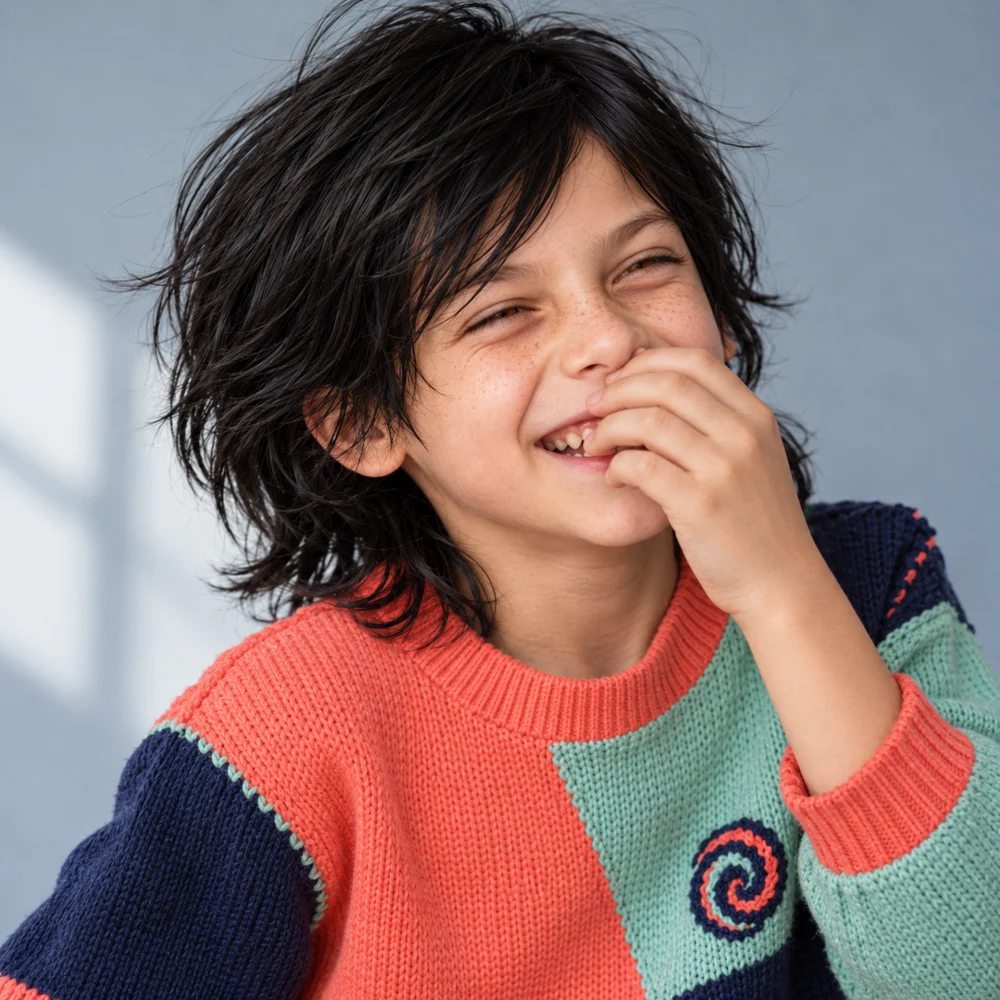
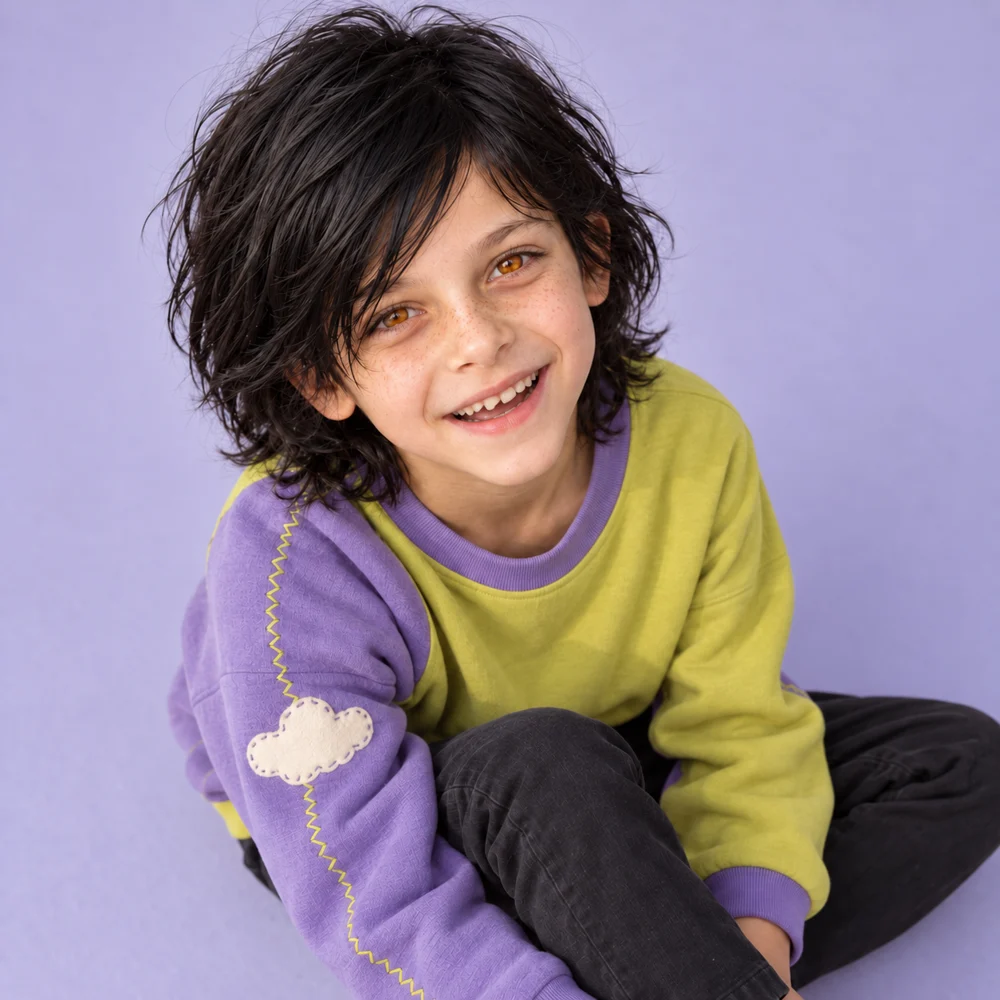
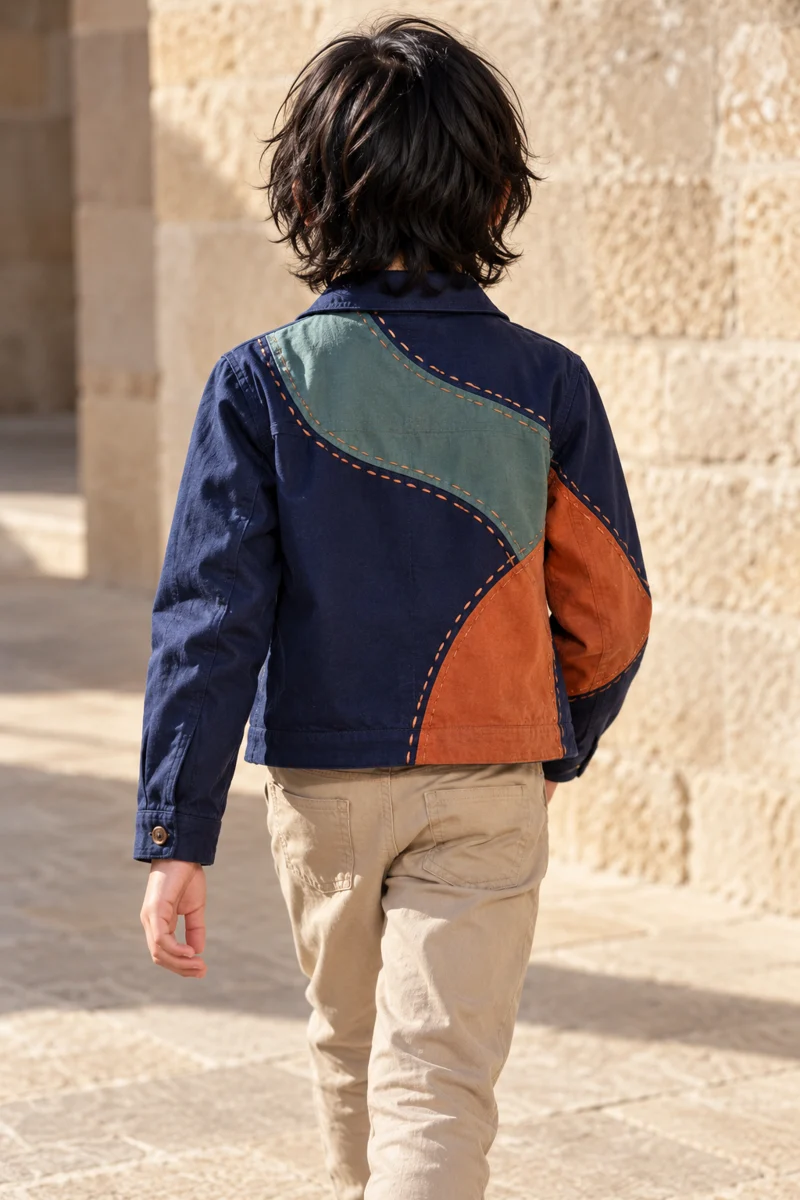
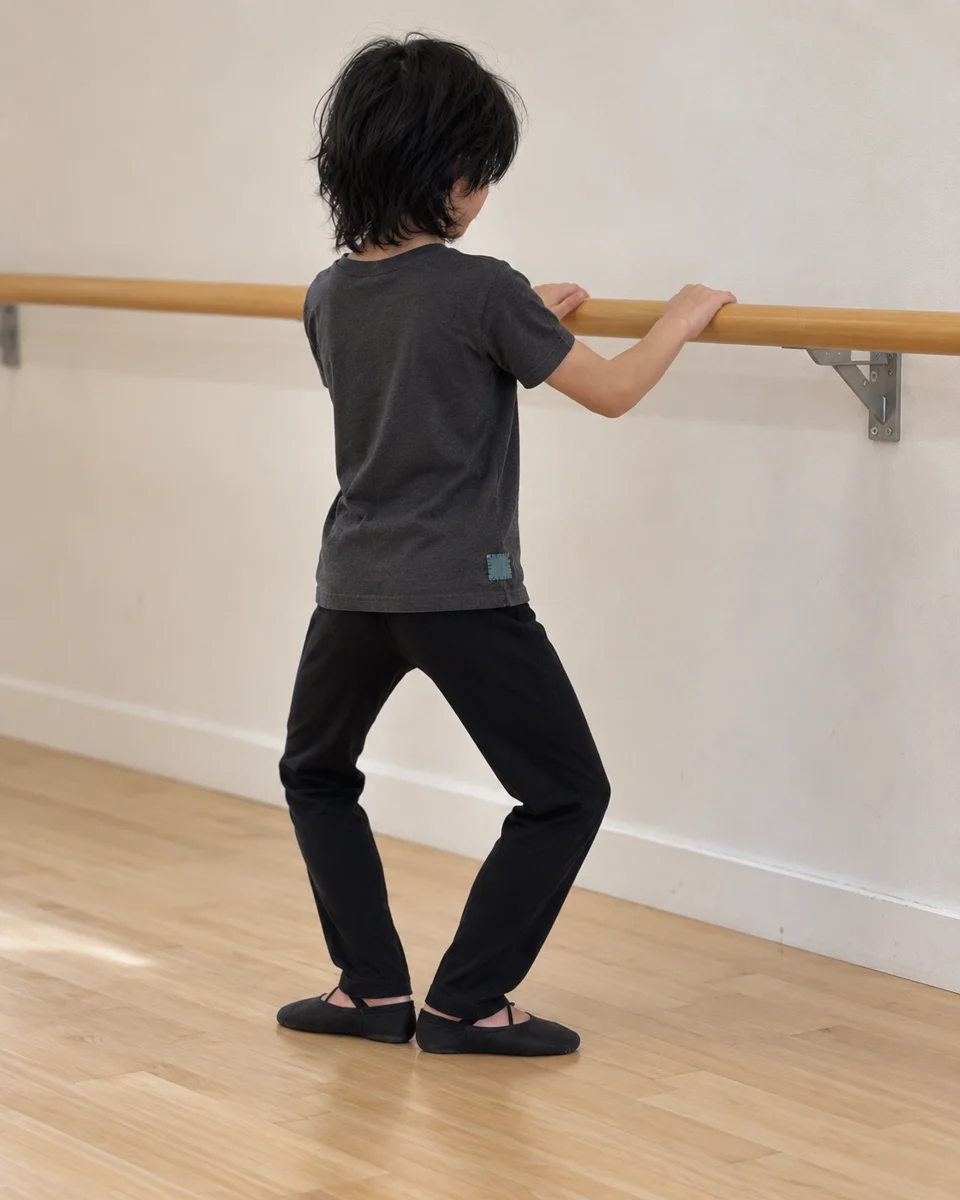
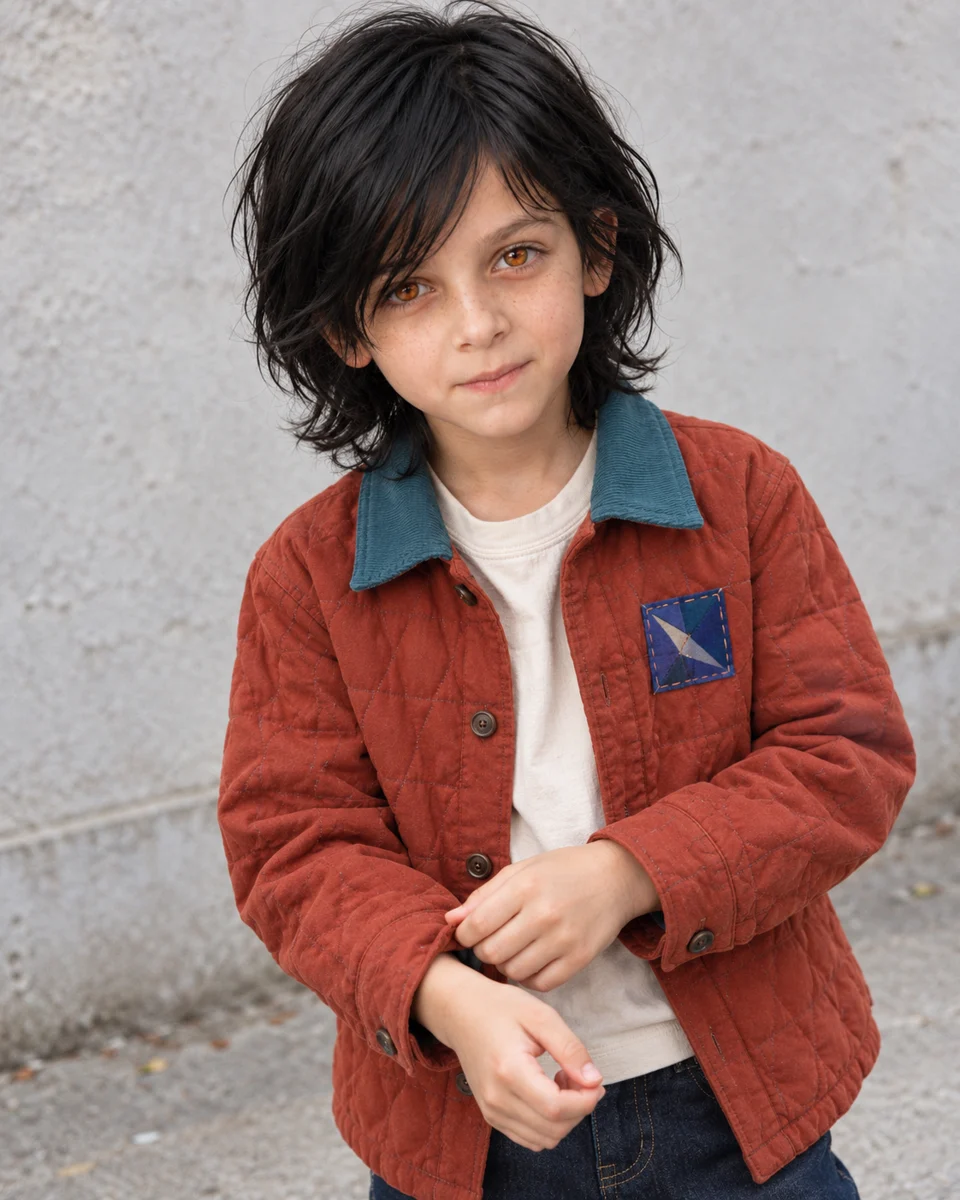
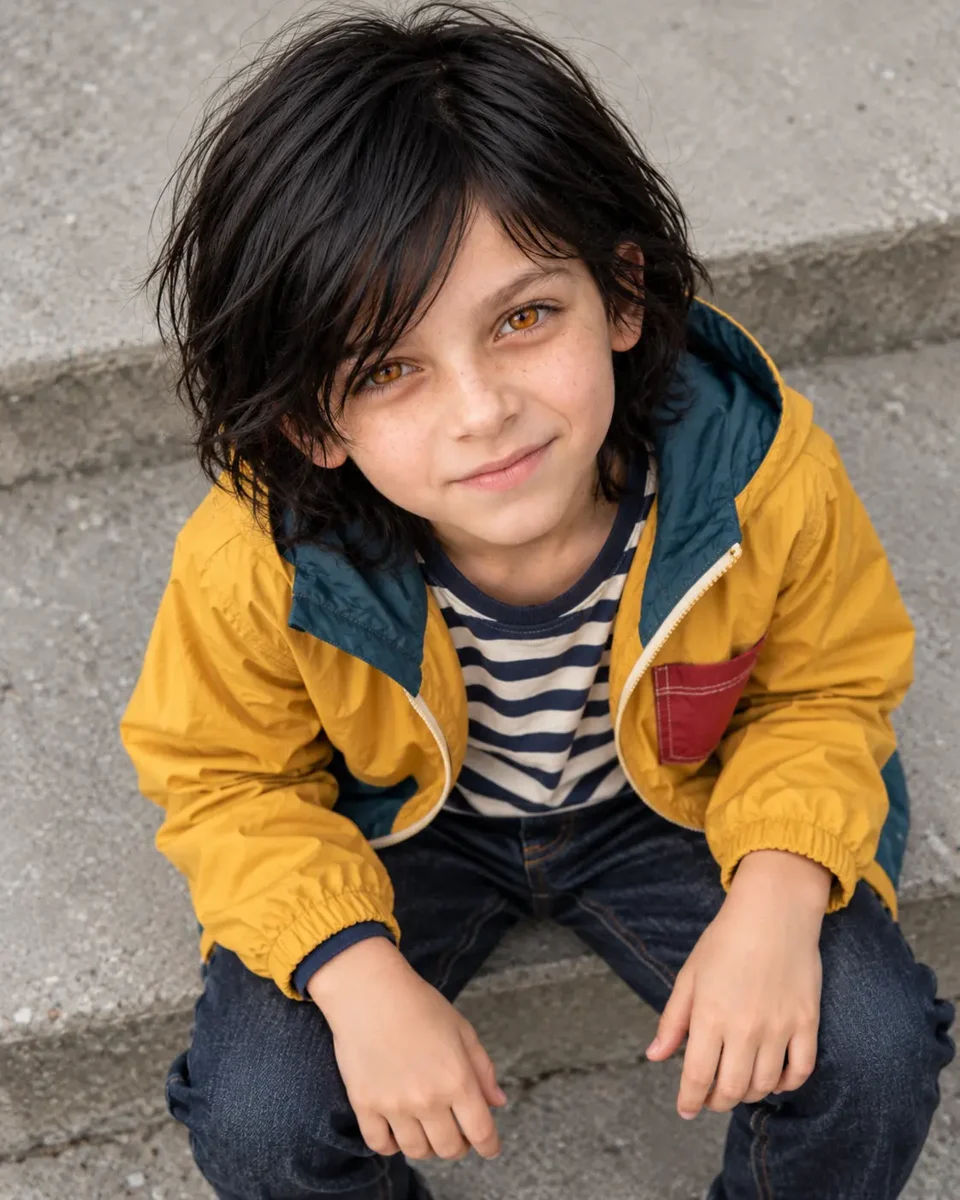
These are the current profile details from my modelling page. Bodies change, so my team reconfirms measurements and sizes when discussing a booking. Every booking involves my guardian and management.
Professional enquiries: send the concept, dates, location, intended image use, team, safeguarding plan and access requirements to management@mutestas.com. My guardian and a member of management stay with me throughout a booking. No sexualised concepts, surprise behind-the-scenes filming or use beyond the agreed licence.
I babysit, and I take the trust involved seriously. The children’s stories belong to them, so I keep their names, photos and identifying details off this page.
I can type, use gestures or pictures, get down on the floor and wait instead of filling every quiet moment with talk. That can work well with children who are anxious, autistic, quiet or still figuring out how to express what they need.
My first babysitting job came through adults who already knew the family. The child was safe and asleep when the parents returned; that experience led to more trust.
Responsible adults stay reachable and plan for the child’s needs, my sleep schedule and my health. Since I cannot call out, emergency communication needs to be planned ahead.
Working with children, and perhaps caring for older people, interests me because patience, attention and dignity matter in both.
I can’t speak, but I can hear. My tablet, typing, signs and gestures are ways I communicate, not reasons to talk over me.
My speech-generating tablet reads my words aloud using a donated voice. I choose the words, timing and tone. If the tablet isn’t available, I can use paper, a phone, gestures or signs.
I know English, German, Japanese, French and Polish. I use some Polish Sign Language and shared signs with my family.
Each condition opens to a plain-language definition, the symptoms or effects I experience, and what helps. My experience is personal; it does not describe everyone with the same diagnosis.
I share these diagnoses because they affect communication, sensory access, timing and everyday life. Medication, appointments and treatment details stay private. The notes below are personal information, not medical advice.
“Bilateral” means both sides; “agenesis” means the tissue never formed. The true vocal folds normally vibrate to make a voice and help protect the airway. This is a physical difference present from birth, not deafness, shyness, mutism or a lack of language.
People noticed I did not cry with a voice at birth; bilateral agenesis was confirmed when I was about three.
Speak to me directly at your usual volume, leave time for my answer, keep my device within reach and charged, and don’t ask me to try to make a voice.
Autism is a lifelong neurodevelopmental difference: the brain processes sensory input, communication, change and social information differently. Autistic people vary widely; there is no single checklist that describes everyone.
I was diagnosed around age six or seven. The traits were there well before the diagnosis.
Give written plans and advance warning, reduce sudden sensory demands, offer a quiet space or headphones, ask before touching me, and treat a shutdown as loss of access, not agreement or defiance. Autism is separate from why I cannot speak.
The pituitary is a small gland at the base of the brain that signals several hormone systems. “Partial” means some of its functions are affected; “acquired” means this developed after an injury. The confirmed deficiencies I share are growth hormone and gonadotropins.
It was identified around age six or seven, while I was in foster care.
My doctors believe a head injury connected to the abuse I experienced caused the condition. “Believe” is deliberate: that is the medical explanation I have been given.
Use my actual age, speak to me directly, and adapt clothing, furniture or equipment when needed without treating me as a much younger child.
The circadian system is the body’s internal timing for sleep and other daily rhythms. With non-24, it does not stay aligned with the 24-hour day, so the sleep window keeps drifting later around the clock.
I was diagnosed at thirteen. Non-24 is identified from a shifting sleep pattern observed over time.
Plan dates and call times with my management in writing, give exact schedule details, and don’t assume one unusually normal-looking week means the pattern has gone away.
C-PTSD can follow repeated or prolonged trauma. It includes post-traumatic stress responses, such as re-experiencing, avoiding reminders and feeling under threat, plus lasting difficulty regulating emotions, feeling safe in relationships or holding a stable sense of self.
I remember being diagnosed around age ten or eleven; the date is approximate.
Stay calm, explain changes plainly, leave me space and a clear way out, keep my communication device available, and don’t demand a detailed account of my past.
GAD is persistent, hard-to-control worry across several areas of life, rather than one specific fear. The subject can change while the worry process keeps going.
I remember being diagnosed around age six or seven.
Give one honest, specific answer or plan, say what is known and what is not, and allow me time to process it. Anxiety should not be used to dismiss a genuine safety or medical concern.
Depression is more than sadness. It can affect interest, energy, hope, concentration and the effort it takes to start ordinary tasks; a good moment does not prove it has gone away.
I remember being diagnosed around age ten or eleven.
Keep my tablet available and let me answer safety questions in writing and with privacy. Take a direct answer seriously, stay calm, and involve trusted adults or professionals when there is a real concern.
These are my diagnoses and my account of their effects, not a medical guide or a description of everyone with the same diagnosis. I keep medication, appointments and treatment plans private.
With a 27-hour internal cycle, each cycle is three hours longer than a 24-hour day. In this simplified example, the same point in that cycle lands about three hours later on the clock each time. This explains the pattern; it does not show my actual sleep schedule.
Drag the slider to see the example point move around a 24-hour clock. The eighth cycle would return to the same clock time.
A hobby doesn’t have to become a skill, a coping strategy or a future job. Sometimes I just like the hour I spend on it.
I write poems, personal pieces, opinions and small observations. Writing gives me time to choose the exact word and finish a thought at my own pace. Some pieces are about politics, disability, communication, foster care or mental health; others are simply about what caught my attention.
I draw, doodle and make digital art. A scribble can help me sort out an idea or settle my attention, but sometimes it is just fun and does not need a deeper meaning.
I play violin and listen to music. Practising can mean pleasure, concentration, frustration and trying again. Music does not have to stand in for my speaking voice; sometimes I just enjoy playing and listening.
I like deciding where a photograph begins and what stays outside it. Ordinary light can change how a face or place feels, and I enjoy making those choices myself.
Ballet is the main kind of dancing I do. I also do some ballroom. I enjoy movement, timing and expression; it can be playful or focused without needing an explanation in words.
I like movement that is headed somewhere. A trail or bike ride gives me a landscape to pay attention to, away from the noise and competition of a busy room.
Books and games let me spend time in other worlds. They fit around my changing sleep hours, though being awake when everyone else is asleep can feel lonely too.
I like looking at the stars. Non-24 means I’m sometimes awake at night, but I don’t want to romanticise a sleep disorder: the sky can be beautiful, and missing daylight, school or family time can still be hard.
I know English, German, Japanese, French and Polish. I like how the same thought can sound different in each language.
Foxes are my favourite animal now. One came right up to me once, and that changed my answer. My favourite colour is viridian. The family cats are just part of home.
I also keep a small fantasy-beaver soft toy given to me by a former foster sibling. It travelled through several moves with me. My relationships stay private; I value people who can text, wait, sit with silence and still be their own person.
Fairness, accurate words, consent and dignity connect my writing, school, care work and interest in law. They matter in everyday interactions as much as big decisions.
Files, reports and conversations can describe someone while leaving them out. I care about what is known, what is uncertain and whether the person gets to explain it in their own words.
A real yes needs information and time. A no should be allowed to stay no, and people can change their minds, about a conversation, a photo, a touch or a plan.
Children and disabled people should be included in decisions about school, care, health and work. Waiting for a typed answer is a small, practical way to make that real.
I can write about difficult things and still keep memories, relationships and other people’s information private. I’m allowed to be playful, ordinary, or simply not interested in explaining myself.
I may take time to warm up around new people. A pause, a typed message or a quiet way of being together can all be part of a real connection.
Writing lets me joke, chat, reassure someone and say what I mean at my own pace. It is not a lesser kind of conversation.
I value people who can wait while I type, sit beside me without demanding constant talk, and still have their own interests and boundaries.
I’m in a relationship, but the relationship itself is private. Personal messages, disagreements and another person’s health or family are not website content.
Trust can take time for me. Clear plans, direct words and patience help; no one person is responsible for managing every hard feeling for me.
These answers cover the practical basics. Some details stay private, and some childhood memories are uncertain; I say so instead of filling in gaps.
Staś is right for everyday conversation; Stanisław is more formal. Please don’t invent a nickname.
I was born in Kluczbork and live in Szczecin, Poland, with my adoptive family. I have twelve siblings, including my twin sister. My biological parents are Polish and Japanese; my biological grandparents have Polish, Japanese, Iranian and Iraqi roots. My adoptive family is my family too.
Writing, poetry, drawing, violin, dance, music, reading, games, photography, stargazing, hiking, cycling and languages. Foxes are my favourite animal; viridian is my favourite colour. I like history, geography and literature.
History, geography and literature. I like learning, though the usual pace and noise of school can make access harder.
Yes. Time to answer, advance notice of changes, flexible timing around my shifting sleep cycle and a quiet place to reset help me take part.
My published story gives my IQ as 142 and EQ as 118. Those are test results, not a complete measure of my abilities or daily capacity. Support and accommodations should not depend on having a particular score.
Yes. I’m still in touch with two former foster siblings. I keep their identities and details private.
Some memories are clear and others are not. I don’t invent scenes, dialogue or exact dates to make a neat story. The broad timeline is that I entered foster care at five and was adopted at twelve.
No. My hearing is normal, and I understand spoken language. I can’t produce a physical voice because I was born without both true vocal folds.
I can make some non-voiced sounds, such as clicking my tongue or teeth, but I can’t speak, whisper, hum, sing or scream. Please don’t ask me to try.
I type or write, use a speech-generating tablet, and communicate with gestures and signs. I use some Polish Sign Language and shared signs with my family. If my device is unavailable, paper, my phone and gestures still work.
The voice was donated by a real person who later became my friend. It is a way to play my words aloud; I choose what it says and how I phrase it.
I know English, German, Japanese, French and Polish. I use writing and typing to communicate. My management accepts website enquiries in English, Polish, Korean and Japanese; those are their contact languages, not my personal language list.
No. Autism affects my sensory processing, communication and need for predictability. The physical reason I have no voice is bilateral vocal-fold agenesis. They are separate diagnoses.
I’m comfortable with “autistic person,” “person with autism” and “autist” when it is meant neutrally. That is my preference; other autistic people may use different words for themselves.
Four operations made swallowing and aspiration much safer; they did not give me a voice. The procedures were partial epiglottopexy, cricopharyngeal myotomy, laryngeal suspension and aryepiglottic-fold plication. I still use a cough-assist machine daily.
My diagnosed non-24 sleep–wake disorder means my expected sleep time drifts around the 24-hour day. It affects when I’m alert and available; it isn’t a choice or a discipline problem.
No. They describe my diagnosed conditions and my experience of them. They aren’t a guide to diagnosing or treating anyone else. My medications, appointments and treatment plans are private.
My portfolio is private. Management may share an appropriate selection after checking who is asking and how the images would be used. Please don’t forward or reuse images beyond an agreed licence.
No. The measurements on this page are a casting snapshot. My management reconfirms fit and sizes when a booking is discussed.
Editorial stills and print, silent movement or character work, book covers, art, fashion and poetry imagery can suit me. I can work in silent video when the direction is visual; I cannot provide dialogue or other vocal sound.
Send the concept, dates, location, intended use, crew and access or safeguarding plan in writing. My guardian and a member of management stay with me for every booking. Please confirm the booking details with my team. I hear normal spoken directions and can work with a compact crew, time to use my device, a quiet place to reset and no strobe, surprise touching or unplanned filming. I dress myself; explain and agree any styling or touch first. Food or drink on camera needs advance agreement and a familiar, approved safe texture. Confirm hours, breaks and travel for the specific date; don’t assume a standard full day.
No sexualised concepts, underwear, sleepwear or bath styling. Ordinary swimwear for a sport or holiday brief can be fine. Costume, uniform, historical and stylised looks are welcome when age-appropriate and agreed in advance.
Rain, a poolside setting, wet hair or splashing can be planned. Going under the surface needs advance planning with my guardian because my cough is weak.
Management quotes the day rate and a separate image-usage licence based on media, territory and duration; half days, fittings and travel days are quoted individually. There is no automatic buyout. The client covers travel and accommodation for me and one guardian. Send the brief to management@mutestas.com.
No. Test shoots or portfolio collaborations may be considered on their merits, but they must be agreed in advance with the same safeguarding and image-use terms as other work.
Two to four weeks is comfortable. A same-week booking may sometimes work, but my shifting sleep cycle can make very short notice difficult. Management confirms what is workable for the specific date.
No. Professional enquiries go through my parent, agent or management at management@mutestas.com. Young people can still send a kind note to the team; they don’t need a company or project.
Say who you are and where you’re based, describe the project, include dates and budget range if relevant, and mention any important access, safety or set conditions.
Management aims to confirm a message within 48 hours. Press and writing enquiries usually get a substantive reply within five working days; bookings within ten working days. If you hear nothing after ten working days, resend your message.
Medication and treatment details, intimate health details, my private relationships, and identifying information about children I babysit. I also leave uncertain memories uncertain. Being open about some things does not make every detail public.
A Boy In Words is the practical, up-to-date introduction. A Boy In Letters is the more personal writing archive, which began in 2025 as Mute Doodle Den; older posts may reflect an earlier version of me. If something differs, trust what I confirm here now. Visit A Boy In Letters ↗
My management handles messages in English, Polish, Korean and Japanese. Professional messages go to my dad, agent or trusted team, so I can stay safe and the adults can handle scheduling, access and contracts.
For bookings, include who you are and where you’re based, the project, timelines and budget range if relevant, and anything important about safety, access or set conditions. Please don’t contact private accounts to arrange work.